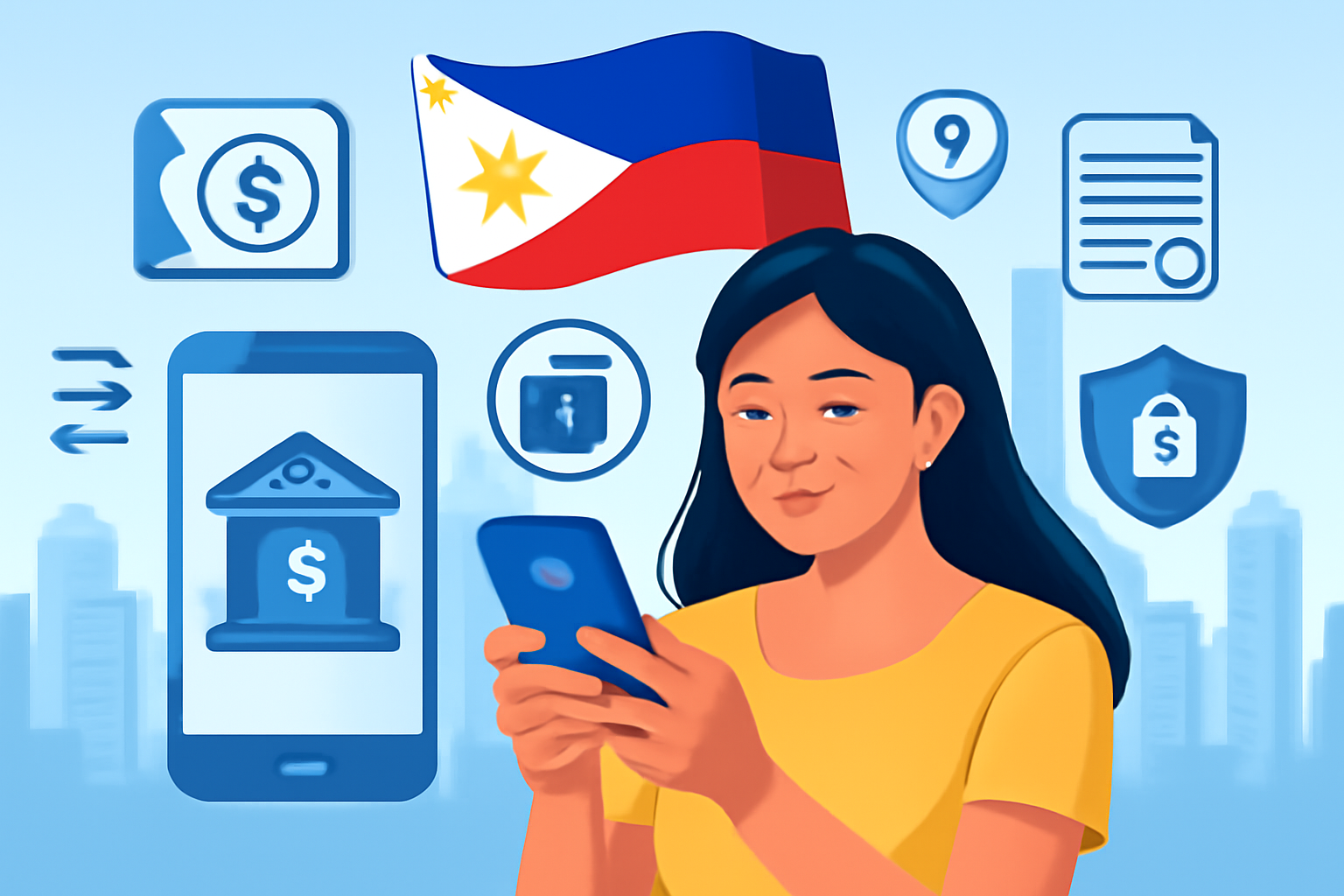

The most consequential battle in Philippine retail banking is not being fought over the interest rate on a savings account. It is being fought over what happens after the account is opened. Traditional banks and digital challengers alike have recognized that a depositor who uses one app for savings, another for payments, a third for investments, and a fourth for bills is a depositor whose loyalty is always for sale. The goal, increasingly, is to become the only app that matters.
Metrobank’s digital strategy offers the clearest example of how a legacy institution is attempting this consolidation. The bank’s eSavings product is no longer just a savings account. Customers who open an eSavings account through the Metrobank App can also access Online Time Deposits and Unit Investment Trust Funds through the same platform . The logic is sequential: a young professional starts with a small savings account, graduates to a time deposit when she has a bit more cushion, and eventually moves into a UITF when her horizon lengthens. Each step deepens the relationship and raises the cost — psychological and practical — of switching to a competitor.
The Data Behind the Lock-In Strategy
Metrobank’s disclosure that Gen Z and millennials represented over 87 percent of new eSavings accounts in 2026 is not just a demographic curiosity. It is evidence that the bank’s digital onboarding funnel is working precisely as designed . Nearly half of these new customers came from Metro Manila and Region IV, the country’s most economically active regions, and the majority were female — a segment that research consistently shows to be more consistent savers over the long term .
But Metrobank is not the only institution playing this game. The digital banks that have driven the sector’s 50 percent deposit growth have their own ecosystem ambitions. Maya Bank’s entire value proposition is built on bundling: the 6 percent savings rate that made it famous is conditional on using the app for bill payments, load purchases, and QR code transactions . The bank is not simply paying for deposits. It is paying for transaction volume and daily engagement, which in turn generate data, fee income, and switching costs that no pure savings product can replicate.
The Unbundling Risk That Nobody Talks About
There is a counterargument to the ecosystem thesis, and it comes from the behavior of young Filipinos themselves. Gen Z is notoriously promiscuous with financial apps — not out of disloyalty, but out of optimization. A saver might keep her emergency fund in Tonik because of the time deposit rate, her daily spending money in GCash for merchant acceptance, and her investment contributions in Metrobank for the UITF access. Each platform serves a distinct function, and the idea that one app should do everything may feel less like convenience and more like a single point of failure.
The BSP data showing 38 million deposit accounts held by 25 million depositors suggests exactly this pattern: many digital bank customers hold more than one account . The average works out to roughly 1.5 accounts per depositor, a figure that implies a meaningful share of users are spreading their money across multiple platforms rather than consolidating.
What Lock-In Actually Requires
For ecosystem strategies to succeed, the integration has to feel seamless rather than extractive. A young depositor who discovers that her “high-yield” savings rate silently dropped because she forgot to pay three bills through the app will not feel locked in. She will feel tricked. The banks that win the Gen Z deposit war over the next five years will likely be those that make the ecosystem valuable enough that customers choose to stay — not those that make leaving painful.