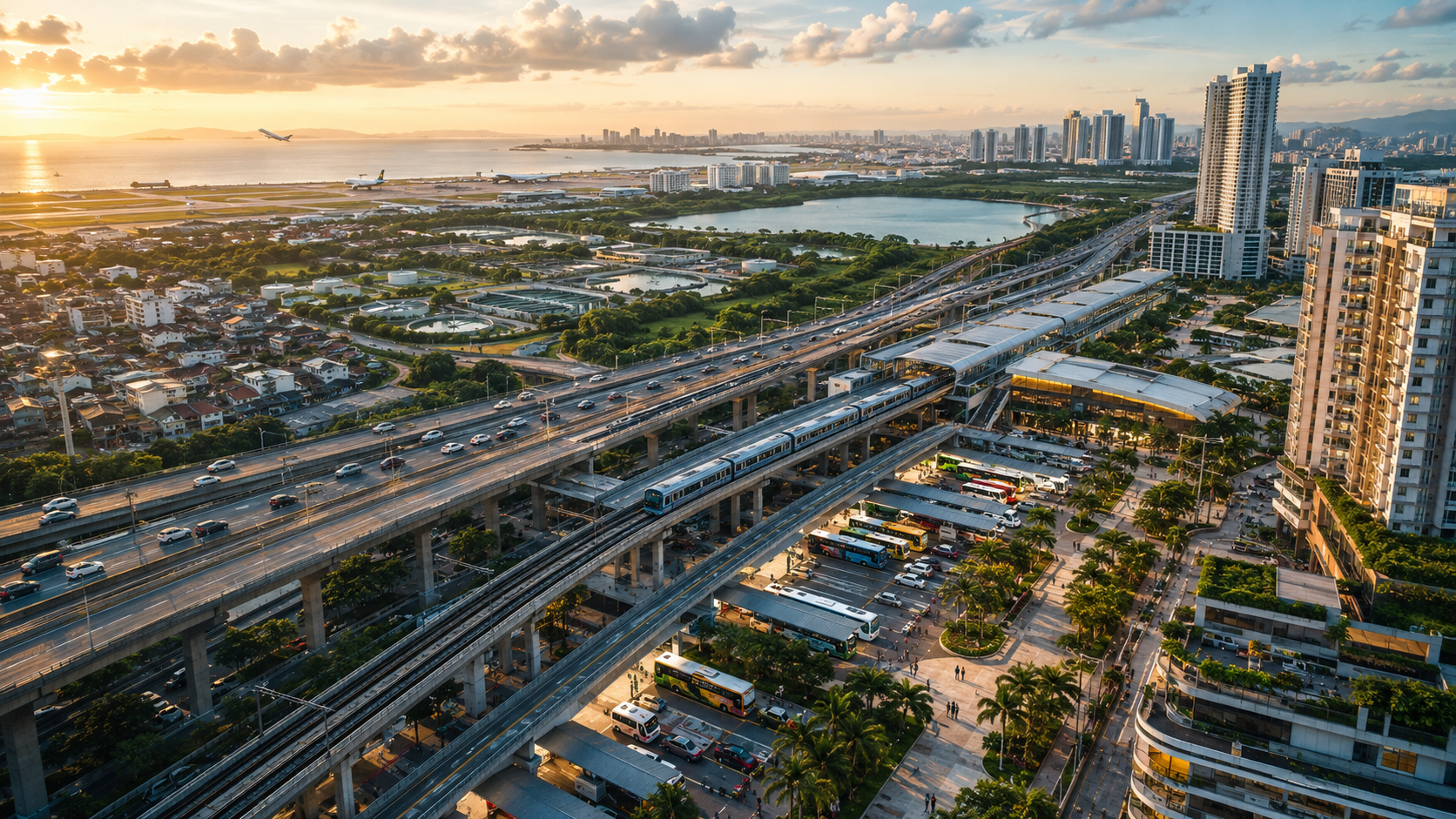

The Cavite–Laguna–Batangas corridor is the physical front line of Philippine nearshoring. It is where electronics locators, food exporters, and logistics operators compete for warehouse space that meets the specific fiscal and customs requirements of relocating global supply chains. In the first quarter of 2026, Cavite captured the largest share of industrial and logistics demand in the corridor, recording the lowest vacancy rate at 5.2%.
Demand Is Strong, but the Supply Is Wrong
Manufacturing occupiers accounted for 51% of total first-quarter industrial demand in CALABA, while distribution and logistics users made up 43%. Cavite led transactions with 30,120 square meters, followed by Batangas with 14,120 square meters and Laguna with 6,520 square meters. The largest single deal was a 14,380-square-meter lease by a halal food exporter in Carmona—a reminder that nearshoring demand is not exclusively electronics.
The problem is not a lack of warehouse space. It is a lack of the right kind of space. CBRE Philippines flagged that 47% of warehouse supply in Cavite is more than 10 years old, and only 26% of current vacancy sits within PEZA industrial parks. For a manufacturer relocating a supply chain, a standalone warehouse without PEZA accreditation means losing duty-free access to production inputs—a cost that can erase the savings from lower labor.
Why PEZA Accreditation Commands a Premium
PEZA-registered facilities provide fiscal incentives, duty-free importation of capital equipment and raw materials, and streamlined customs treatment. For an electronics manufacturer importing components for assembly and re-export, the difference between a PEZA-accredited building and a generic warehouse is not cosmetic—it is the difference between a viable landed cost and an uncompetitive one.
That explains why CBRE describes a Cavite build-to-suit project for PEZA-accredited occupiers as “the sharpest play” in the market. Developers who can deliver compliant, modern facilities on a speculative or build-to-suit basis are positioned to capture relocation demand that cannot wait for a two-year construction cycle.
The Logistics Layer Is Tightening
The industrial story is inseparable from port performance. In October 2026, Hapag-Lloyd suspended new bookings to Manila, Batangas, and Subic until the end of the year, citing port congestion and constraints on empty-container returns. The suspension directly threatens electronics exporters that depend on sea freight for imported components and finished-goods shipments.
For locators evaluating the CALABA corridor, port reliability is now a board-level variable. Batangas port’s proximity to industrial parks in Laguna and Cavite is an advantage, but only if container flows remain predictable. The government’s port decongestion efforts and customs processing upgrades are being watched closely by manufacturers whose production schedules cannot absorb two-to-four-day vessel waiting times.
Regional Diversification Beyond CALABA
The corridor is not the only game. Visayas and Mindanao are emerging as alternative hubs for offices, logistics, and industrial operations, supported by improving infrastructure and expanding industrial activity. New Clark City is developing a 106-hectare industrial park, and the BCDA pipeline includes logistics apron expansions at Clark International Airport. For manufacturers that do not need Metro Manila proximity, these alternatives offer lower land costs and less congestion—provided power and port connectivity keep pace.
The CALABA corridor’s 2026 performance shows that nearshoring demand is real and bankable. The constraint is execution: delivering modern, accredited, and logistically connected industrial space fast enough to convert interest into leases. Developers who solve that problem will find willing tenants; those who build generic warehouses will compete on rent in a market where the wrong product is already abundant.