The Data Goldmine in Every Smartphone
In a country where 80% of the population owns a smartphone, traditional credit card ownership remains below 5%. For years, this gap meant that millions of micro-entrepreneurs were invisible to lenders. Today, alternative credit scoring is turning mobile phone usage into a reliable proxy for creditworthiness. Fintech companies analyze thousands of data points—top-up frequency, e-wallet transaction volume, bill payment consistency, and even the stability of social connections—to generate risk profiles for people without a single bank record. In 2025, GCash’s lending arm GLoan reported serving over two million borrowers, most of them nano- and micro-enterprise owners.
How Alternative Credit Scoring Works in Practice
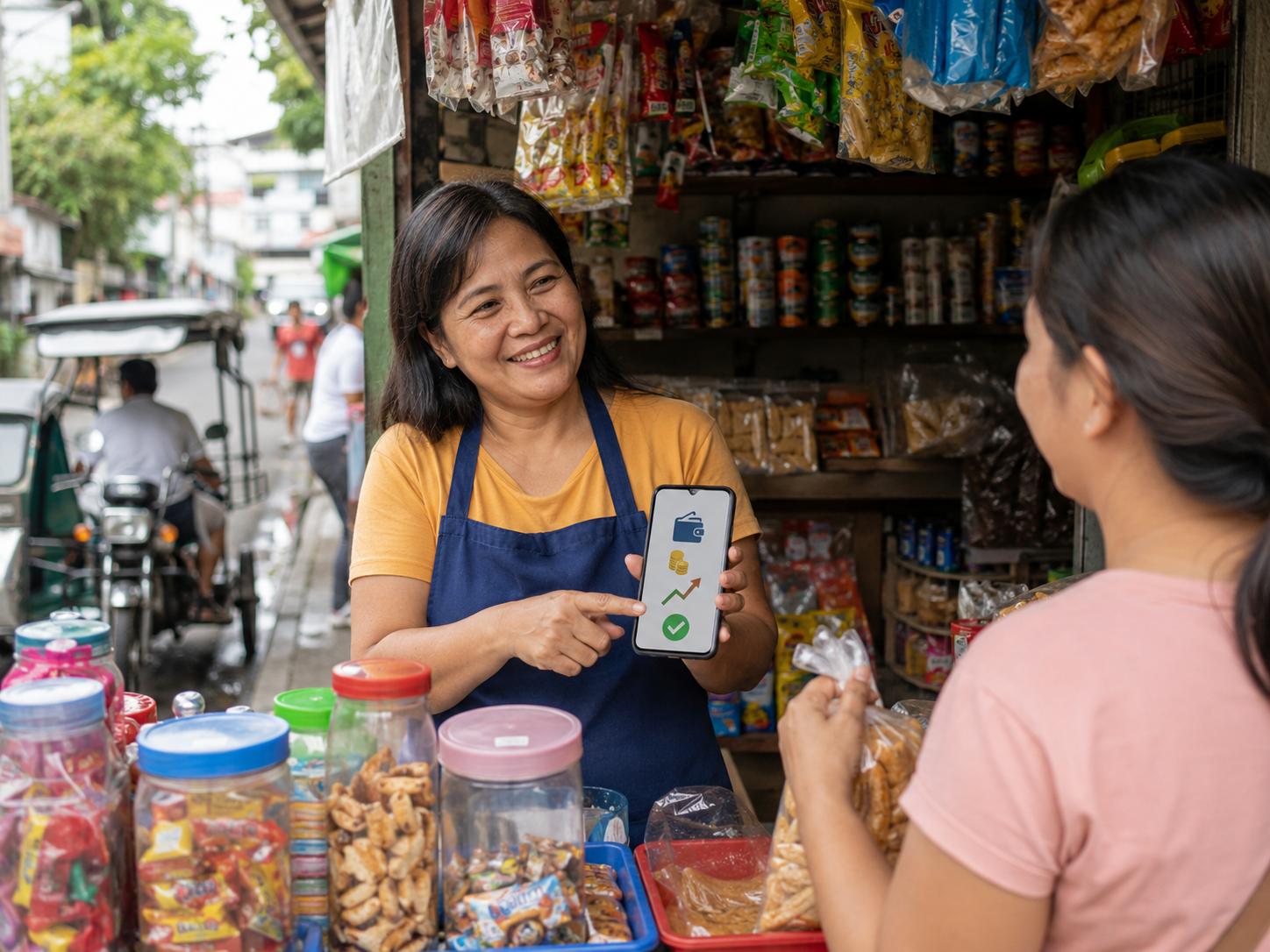
When a sari-sari store owner applies for a PHP 3,000 loan through a fintech app, the system instantly pulls consented data from her mobile wallet, telecom operator, and social media accounts. An algorithm evaluates her cash flow patterns: regular GCash transfers from customers, consistent mobile load purchases for resale, and timely payment of utility bills via the app. Within seconds, she receives a credit decision. There is no need for collateral, land titles, or lengthy interviews. This model has proven remarkably accurate, with default rates often lower than those of unsecured personal loans issued by conventional banks.
BSP Circular 1177 and the Regulatory Backbone
To ensure this innovation does not come at the expense of consumer protection, the Bangko Sentral ng Pilipinas issued Circular No. 1177, which establishes guidelines for the use of alternative data in credit decisioning (BSP Circular 1177). The regulation mandates transparency, requiring lenders to explain the factors that influenced a loan denial or approval. It also reinforces data privacy safeguards in alignment with the Data Privacy Act. With this framework, fintech players can build their scoring engines with confidence, while borrowers retain control over their personal information.
From Unbanked to Creditworthy: Real Cases
Jun, a 35-year-old tricycle driver in Cebu, illustrates the transformation. He used a lending app linked to his mobile wallet to borrow PHP 4,000 for a sidecar upgrade. Despite having no formal employment records, his consistent mobile load purchases and remittance receipts gave the algorithm enough signal to approve the loan. He repaid the amount in 30 daily installments automatically deducted from his wallet balance. The positive record now allows him to access larger sums at lower interest rates, progressively integrating him into the formal financial system.
The Road Ahead to 2026 and Beyond
Industry projections suggest that by 2026, alternative credit scoring could unlock over $3 billion in new credit for Philippine MSMEs. The integration of AI, machine learning, and open banking APIs will make risk assessments even more precise. Meanwhile, the government’s push for universal digital IDs will eliminate duplicate or fraudulent applications, further reducing lender risk. The Philippine model is increasingly seen as a blueprint for emerging economies seeking to close the credit gap through technology rather than brick-and-mortar expansion.