Western fashion has strongly influenced the way Filipinos dress, especially in urban areas where global culture is highly visible. From formal suits to casual denim, from Hollywood-inspired glamour to social media trends, Western style has become part of everyday fashion in the Philippines. Yet the relationship between Western fashion and Filipino identity is not simple. It involves history, adaptation, aspiration, and cultural negotiation.
The Philippines has always had rich clothing traditions. Indigenous groups created textiles and garments suited to their environment and community life. Weaving, beadwork, embroidery, and natural fibers were important parts of local dress. These traditions were later affected by Spanish rule, which introduced European forms of modesty, religious influence, and formal clothing. The terno and baro’t saya developed within this historical setting, combining local craftsmanship with colonial-era silhouettes.
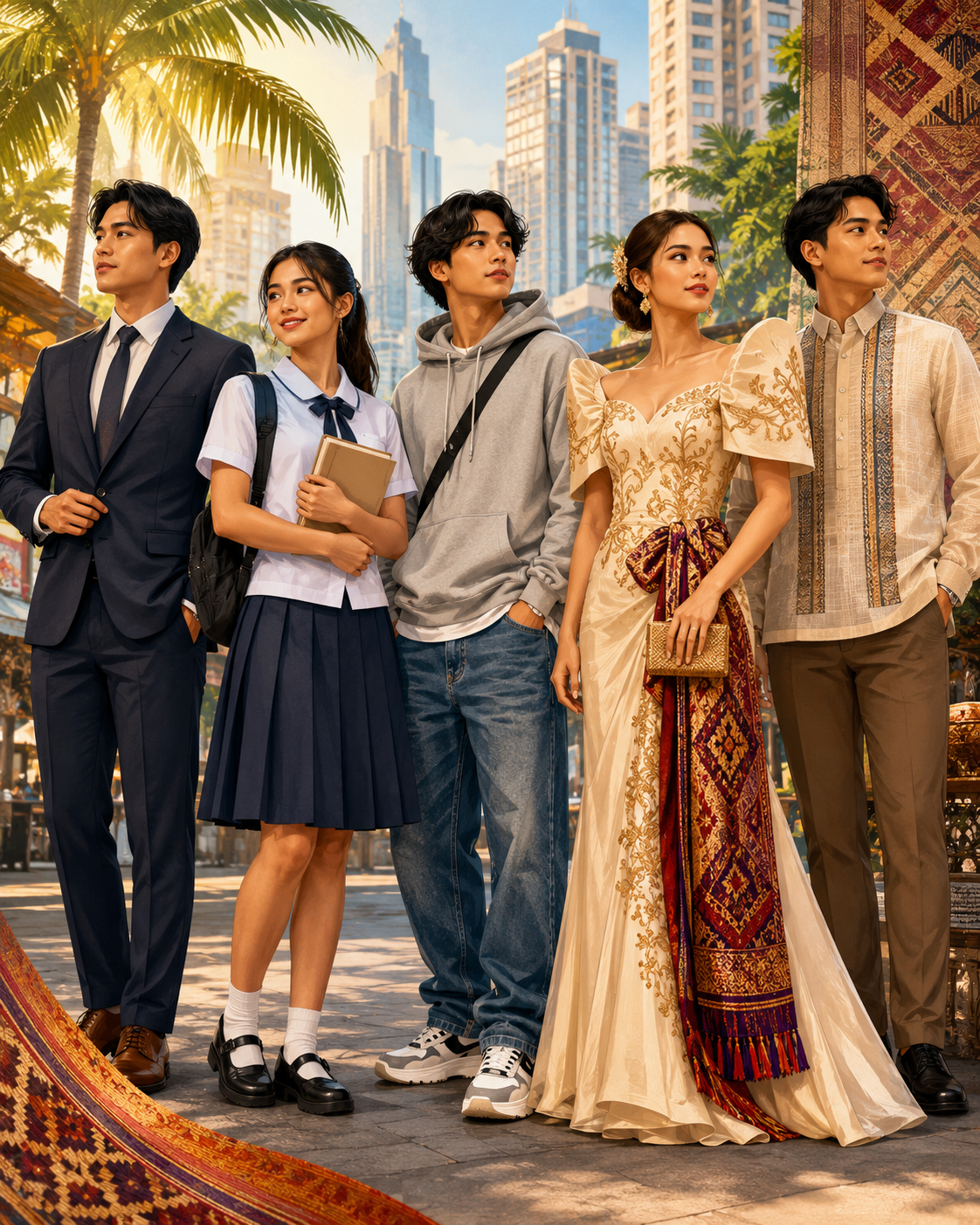
American influence in the twentieth century expanded Western fashion even further. American teachers, administrators, soldiers, films, and magazines brought new clothing models into Filipino society. The Western suit became standard for educated men and government workers. Women adopted dresses, skirts, blouses, and accessories influenced by American fashion. Schools and offices helped normalize Western clothing because they required uniforms and dress codes based on Western standards.
Fashion also became tied to social ambition. Wearing Western clothes often suggested education, modern thinking, and economic mobility. In cities such as Manila, Western-style clothing became associated with sophistication and progress. For many Filipinos, dressing in modern Western fashion was a way to participate in a changing society and show readiness for professional life.
Mass media made this influence stronger. Hollywood films introduced glamorous gowns, stylish suits, fashionable hairstyles, and new beauty ideals. Later, television, music videos, magazines, and online platforms accelerated the spread of trends. Filipino celebrities also played an important role by wearing Western-inspired fashion on screen and at public events. Their styles were copied by fans and adapted for everyday use.
Western casual wear has become one of the most lasting influences. Jeans, T-shirts, sneakers, hoodies, polo shirts, and sportswear are common across different age groups. These clothes are practical and flexible, making them suitable for school, work, leisure, and travel. They also fit the lifestyle of a young population connected to global culture. However, Filipinos often adjust these trends to local weather, choosing lighter fabrics, relaxed fits, and breathable materials.
At the same time, traditional fashion remains significant. The barong Tagalog is still worn during weddings, formal ceremonies, graduations, and national events. The terno continues to symbolize Filipino elegance, especially when redesigned by contemporary designers. These garments remind people that Western fashion did not fully replace local identity. Instead, Filipino fashion often moves between global modernity and national heritage.
Contemporary Filipino designers are increasingly interested in cultural revival. They use indigenous textiles, traditional weaving communities, and handcrafted details while applying modern cuts and Western-style tailoring. This creates garments that can appear on international runways while still carrying Filipino meaning.
The influence of Western fashion in the Philippines is powerful, but it is not one-sided. Filipinos have taken Western styles and made them their own. Fashion in the Philippines today shows a balance between imported trends and local creativity, proving that identity can survive and even grow stronger through adaptation.