
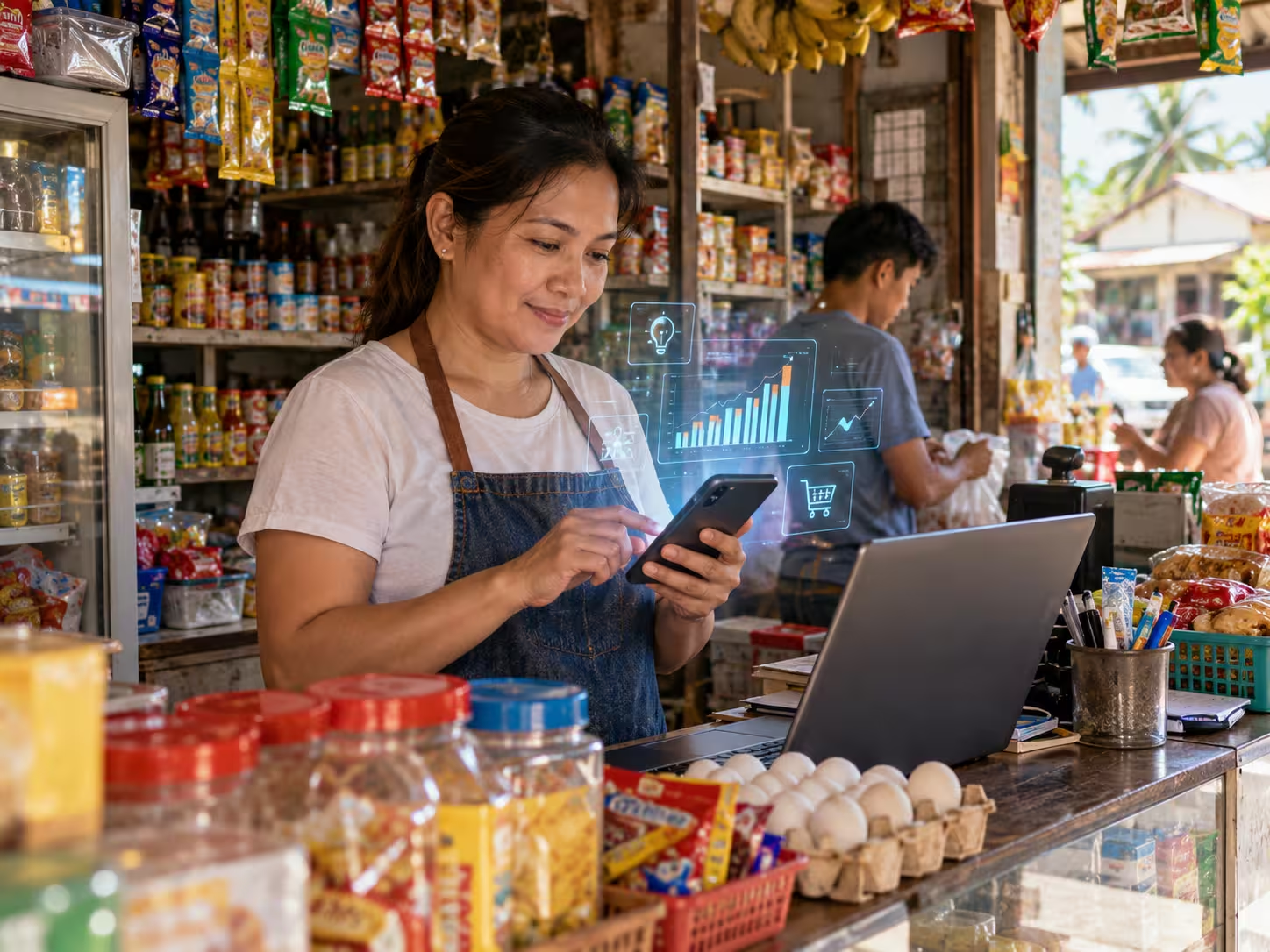
The Micro-Retail Revolution Happening in Neighborhood Stores
Sari-sari stores—the small, ubiquitous neighborhood shops that serve as the lifeblood of Filipino communities—are undergoing a quiet but profound transformation. Technology startup Packworks, which supports a network of 300,000 micro-retailers, has demonstrated that artificial intelligence can deliver transformative results for even the most traditional retail formats.
In June 2026, Packworks reported that sari-sari stores using its AI-powered Store Insighting Project (SIP) for inventory planning saw a 79% surge in sales of their top-selling items. The findings, based on an analysis of over one million monthly transactions, offer the most compelling evidence to date that AI is not just for large corporations—it can work for the smallest enterprises in the most challenging environments.
How SIP Works: Democratizing Data for Grassroots Entrepreneurs
The Store Insighting Project was developed by Packworks with support from the Department of Science and Technology-Philippine Council for Industry, Energy and Emerging Technology Research and Development’s Startup Grant Fund Program.
Using sari-sari store transaction data, SIP generates actionable recommendations on inventory, product mix, pricing, and demand patterns. Rather than requiring store owners to interpret complex analytics dashboards, the system delivers insights in practical, easy-to-understand formats that busy micro-entrepreneurs can act on immediately.
The results were striking. The median gross merchandise value (GMV) of the top 50 items sold by AI-enabled sari-sari stores surged by 79% to P335,818 per store from P187,229. Store owners also used the SIP to better manage slower-moving products, posting a 96% surge in median GMV sales for those items to P14,429 from P7,361.60.
Overall, stores using AI-driven insights saw a 29% increase in total sales and a 20% growth in the median number of transactions.
Why This Case Study Matters for Filipino MSMEs
The Packworks experience challenges the assumption that AI adoption requires significant upfront investment, technical expertise, or organizational complexity. Sari-sari store owners—many of whom operate on razor-thin margins and manage their businesses manually—were able to benefit from AI within just two months of adoption.
“Our findings show that when data is democratized, we give grassroots entrepreneurs the power to chart their own growth,” said Andoy Montiel, Packworks’ chief data officer.
The SIP platform addresses a fundamental challenge for micro-retailers: knowing what to stock, how much to stock, and when to reorder. Traditional sari-sari store management relies heavily on intuition and memory, which can lead to both stockouts of popular items and excess inventory of slow-moving goods.
Aligning with National Development Priorities
Packworks’ initiative aligns with the Philippine Development Plan (PDP) 2023 to 2028, under which the government promotes the use of emerging technologies like AI for more efficient industries and services.
“By equipping sari-sari store owners with the insights to stock smarter and operate efficiently, we are not only boosting individual store sales but expanding access to technology to build a more resilient grassroots economy,” Montiel added.
The Packworks model demonstrates a viable pathway for AI adoption among Filipino MSMEs: start with a specific, high-impact use case (inventory planning), deliver insights through familiar channels (mobile), and measure results in terms that matter to the business owner (sales and profitability). For the hundreds of thousands of sari-sari stores across the archipelago, this approach offers a practical template for leveraging AI without disrupting the fundamental nature of their operations.