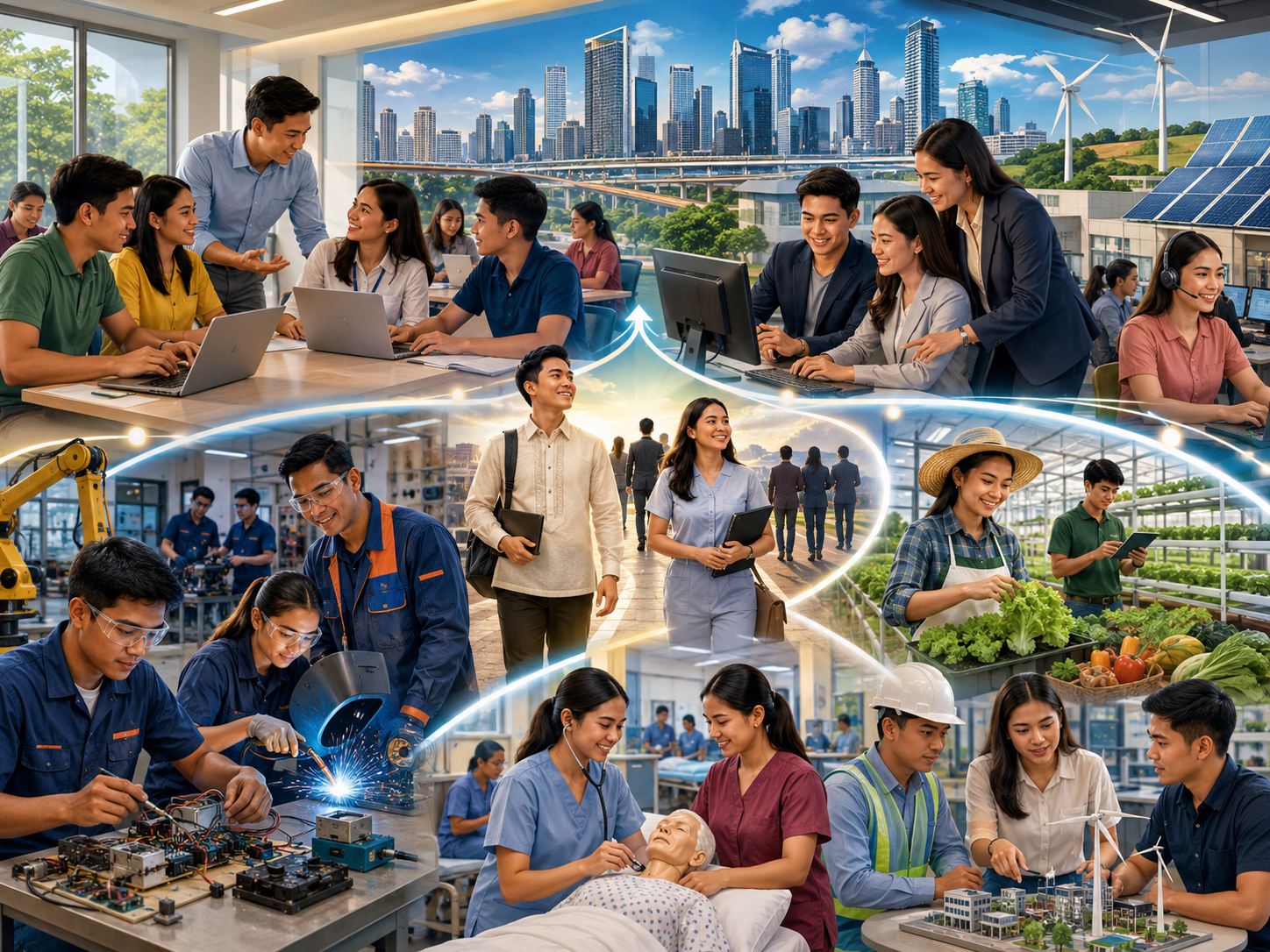
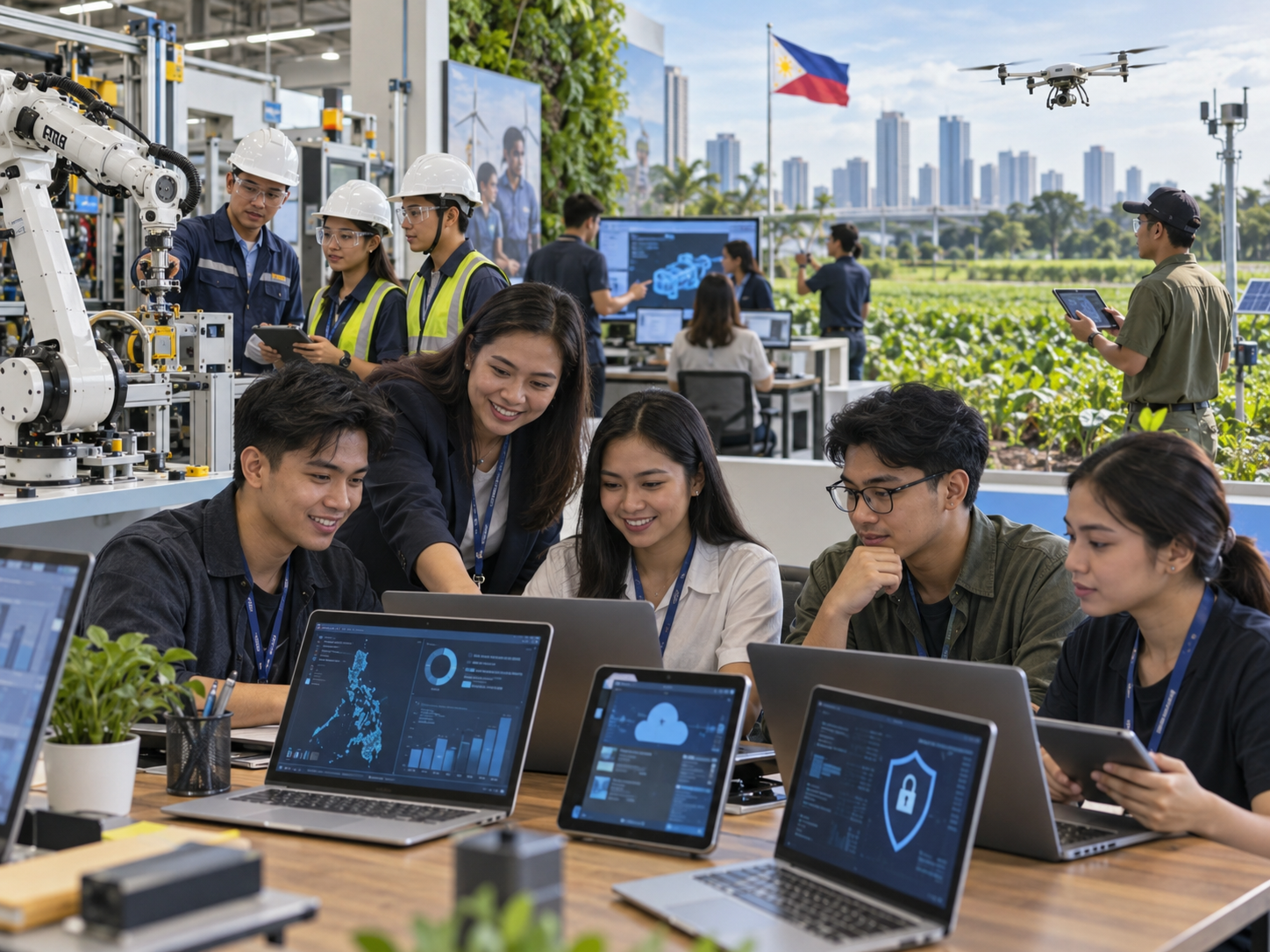
As the Philippines confronts the escalating impacts of climate change, its workforce strategy is adapting. The year 2026 signals the rise of the “Green Collar” worker. Professional education is pivoting away from carbon-heavy industries and toward sustainable practices. This is not just an environmental imperative; it is an economic calculation. The global market is demanding green products and services, and the Philippines is positioning its labor force to capitalize on this shift.
Renewable Energy: The New Vocational Frontier
The energy sector is undergoing a radical transformation. With the Philippine Energy Plan targeting a 35% share of renewable energy by 2030, the demand for skilled technicians has exploded.
Training programs in 2026 are heavily focused on solar photovoltaic (PV) installation and wind turbine maintenance. TESDA has partnered with solar energy firms to develop specialized curricula that go beyond basic electrical work. Students are trained in the nuances of grid integration, battery storage technology, and energy efficiency auditing. These are high-ticket skills that command significant salaries. A certified solar installer in 2026 earns substantially more than a standard electrician, reflecting the specialized knowledge required to harness the country’s abundant sunlight.
Sustainable Agriculture and Agritech
The stereotype of the Filipino farmer as an aging, low-tech laborer is being dismantled. The 2026 agricultural training landscape is high-tech and data-focused.
“Agripreneurship” is the buzzword of the decade. Training centers in Nueva Ecija and Bukidnon are teaching farmers how to utilize IoT (Internet of Things) sensors for water management and organic pest control. The focus has shifted from mere production to supply chain management and value-added processing. Young Filipinos are being trained not just to farm rice, but to process it into premium organic products for export. This shift is crucial for food security and for attracting the youth back to rural professions.
The Circular Economy and Waste Management
Waste is increasingly viewed as a resource. Training programs centered on the circular economy are sprouting up in urban centers.
These programs teach participants how to convert plastic waste into construction materials like eco-bricks or how to manage high-tech composting facilities. While this sector is less glamorous than IT, it represents a massive employment opportunity. The Ecological Solid Waste Management Act has created a legal requirement for LGUs (Local Government Units) to implement better waste segregation, and they need trained personnel to do it. By 2026, “Waste Management Specialists” are recognized as a legitimate and essential profession, taught through rigorous certification programs focused on environmental science and logistics.
Green Construction and LEED Certification
The building sector is a major contributor to global emissions. The Philippine construction industry is responding by upskilling its workforce in green architecture standards.
Training modules now include components on LEED (Leadership in Energy and Environmental Design) principles and BERDE (Building for Ecologically Responsive Design Excellence). Architects and foremen are being trained in the installation of green roofs, passive cooling systems, and sustainable material sourcing. This expertise is becoming a prerequisite for large government infrastructure projects, which now mandate sustainability clauses in their contracts. By integrating these skills into the core curriculum of engineering and vocational schools, the Philippines ensures that its building boom does not come at the expense of its ecology.