
REITs as an Alternative Financing Instrument
The Philippine REIT reform of 2026 is not only about expanding investment choices. It is also a strategic step to address the national infrastructure financing gap. By allowing toll roads, airports, ports, ICT infrastructure, and energy assets into REIT structures, the government and private companies now have a new channel to recycle capital from already operational projects.
This approach follows the successful model of neighboring countries such as Singapore and Malaysia, where infrastructure REITs have become key vehicles for financing expansion without burdening government balance sheets. SEC Chairperson Francis Ed. Lim and Commissioner McJill Bryant T. Fernandez explicitly highlighted the regulator’s development initiatives to expand opportunities under the amended REIT framework.
Toll Roads and Airports: A Waiting Pipeline
Monzon from the PSE revealed that discussions with toll road operators have shown strong intent to conduct an IPO of combined toll operations. This is not mere speculation. With the expanded definition of assets covering toll roads, railways, airports, and air navigation facilities, the pipeline of projects that can be REIT-ed is enormous.
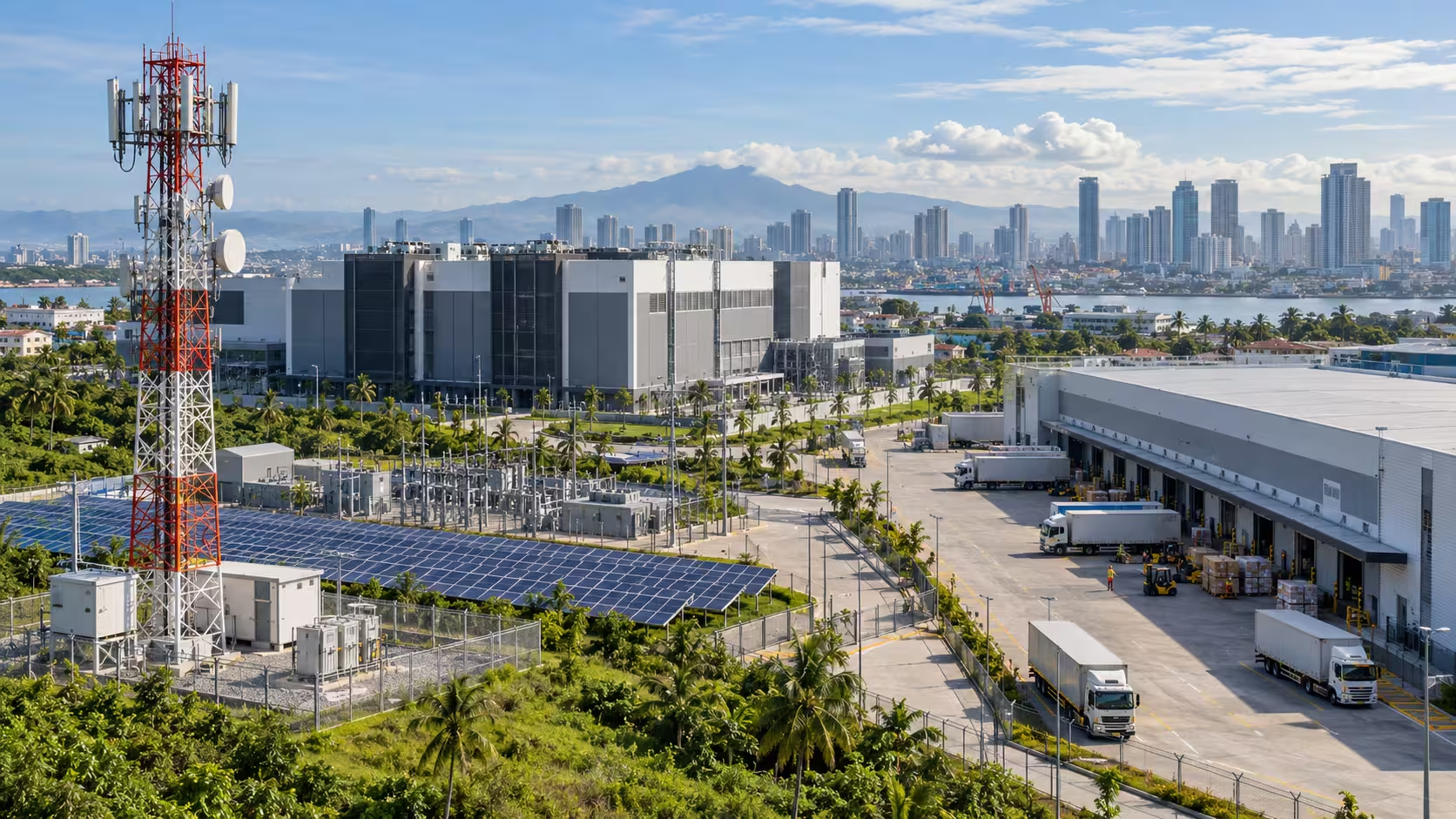
Ocampo from ICCP added that the rule changes could attract multi-billion-peso REIT offerings from toll road operators, water concessions, fiber optic network providers, cellular tower operators, and data center developers. For infrastructure companies, this means access to public capital without having to fully divest strategic assets, while also creating greater market discipline through transparency and governance requirements.
Two-Year Reinvestment Window
One important feature of this reform is the extension of the reinvestment period for sponsors from one year to two years, counted from the receipt of proceeds from the sale of REIT shares or income-generating property. Reinvestment options include equity investments, loans, debt purchases, or repayments related to real estate or infrastructure projects in the Philippines. This flexibility gives sponsors room to plan capital recycling strategically, rather than merely meeting deadlines.
The longer window also encourages sponsors to prepare assets properly before listing, which can lead to better-quality REIT offerings and stronger investor confidence. It also supports the government’s broader infrastructure agenda by allowing private capital to be mobilized more efficiently.