The transformation of tourism in the Philippines is closely connected to the work of local companies. While the country’s islands, beaches, mountains, and cultural festivals provide the foundation for tourism, businesses are the ones that convert these assets into accessible and meaningful experiences. Filipino enterprises have helped modernize travel by improving connectivity, expanding accommodations, developing digital services, supporting communities, and promoting local identity.
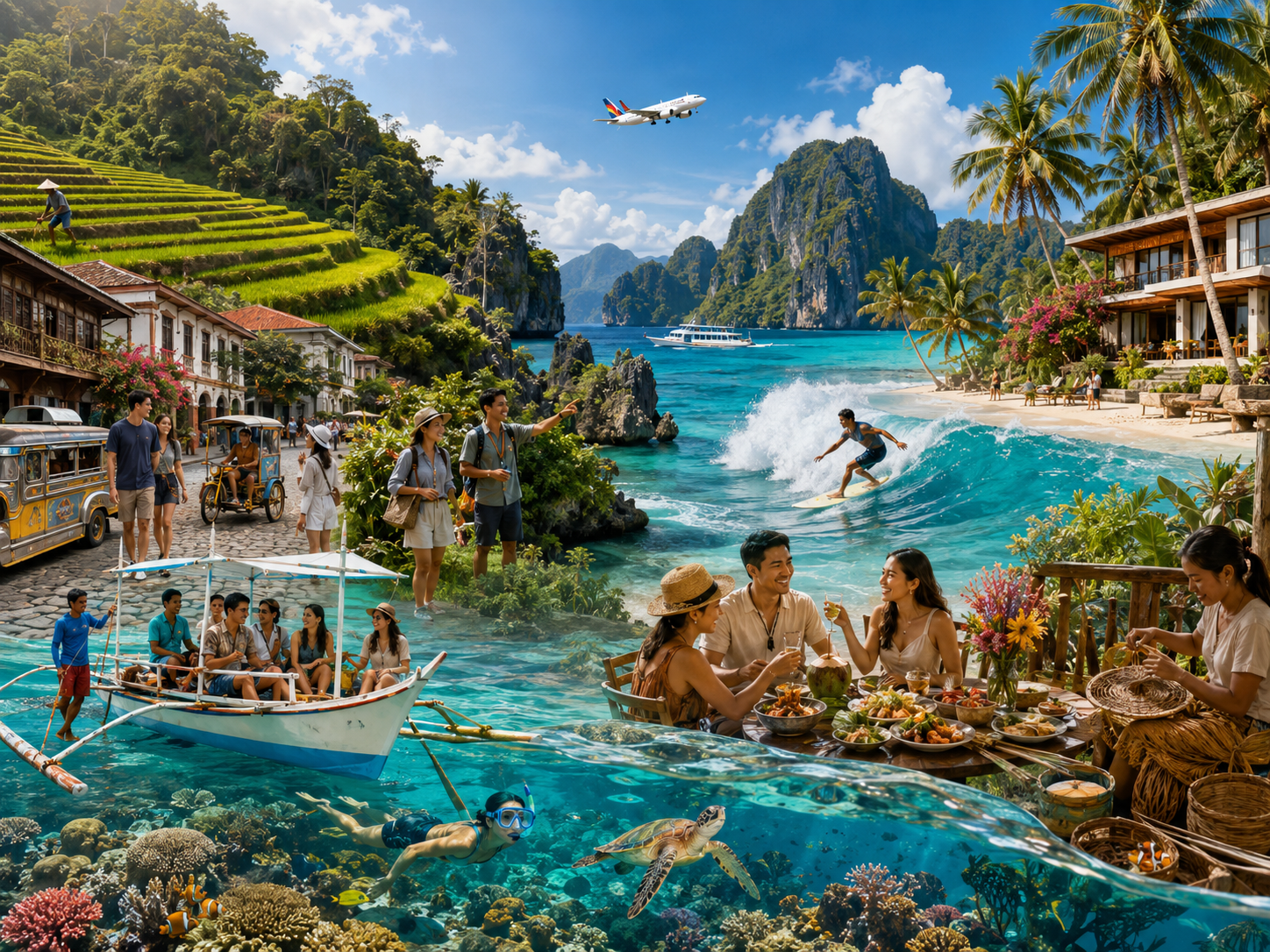
Because the Philippines is an island nation, transportation is a key factor in tourism growth. Local carriers have made it easier for travelers to visit destinations that were once difficult to reach. Cebu Pacific, Philippine Airlines, ferry operators, bus companies, and local transport providers connect cities, provinces, and island communities. Improved routes encourage tourists to explore beyond Metro Manila and visit places such as Palawan, Cebu, Bohol, Iloilo, Davao, Siargao, and the Cordillera region. This movement creates business opportunities for hotels, restaurants, guides, drivers, market vendors, and souvenir makers.
Hospitality companies have also shaped the direction of the industry. Filipino-owned hotels and resorts provide services that match different traveler needs. Luxury resorts attract high-spending visitors, while mid-range hotels, hostels, and homestays serve families, backpackers, and domestic tourists. Local hotel groups and independent operators often highlight Filipino hospitality, which remains one of the country’s strongest tourism assets. Their ability to combine professional service with warmth and cultural familiarity makes Philippine tourism more distinctive.
The digital economy has expanded the reach of local tourism businesses. Social media pages, booking platforms, online reviews, and digital payment systems allow small companies to compete in a wider market. A local tour guide in Bohol, a surf instructor in Siargao, or a family-owned resort in Palawan can promote services online and communicate directly with guests. Digital tools reduce dependence on traditional travel agencies and give smaller entrepreneurs more control over pricing, branding, and customer relationships.
Local companies are also encouraging a shift from passive sightseeing to participatory travel. Tourists increasingly want experiences that feel personal and educational. Filipino businesses respond by offering food tours, heritage walks, diving trips, farm stays, wellness retreats, craft workshops, and community visits. These activities allow travelers to engage with local people and traditions rather than simply taking photos of famous landmarks. As a result, tourism becomes a channel for cultural exchange and local storytelling.
Sustainability has become a major concern in Philippine tourism, especially in destinations affected by overcrowding, waste, and environmental pressure. Local companies have an important responsibility in addressing these issues. Resorts can adopt waste reduction programs, tour operators can follow responsible visitor limits, and transport providers can support safer and more organized travel systems. Businesses that protect natural resources are also protecting their own future, because tourists visit the Philippines largely because of its clean beaches, coral reefs, forests, and landscapes.
The economic impact of local companies is broad. Tourism creates jobs not only in hotels and airlines but also in farming, fishing, construction, handicrafts, entertainment, food production, and transport. When local companies buy from nearby suppliers and hire residents, tourism income circulates within communities. This helps reduce the gap between major tourist centers and smaller towns.
The transformation of Philippine tourism shows the power of local enterprise. Filipino companies understand the country’s geography, culture, and customer expectations. Through innovation and community connection, they are turning tourism into a stronger engine for inclusive growth.