
The iHub Model: Pre-Incubation at Scale
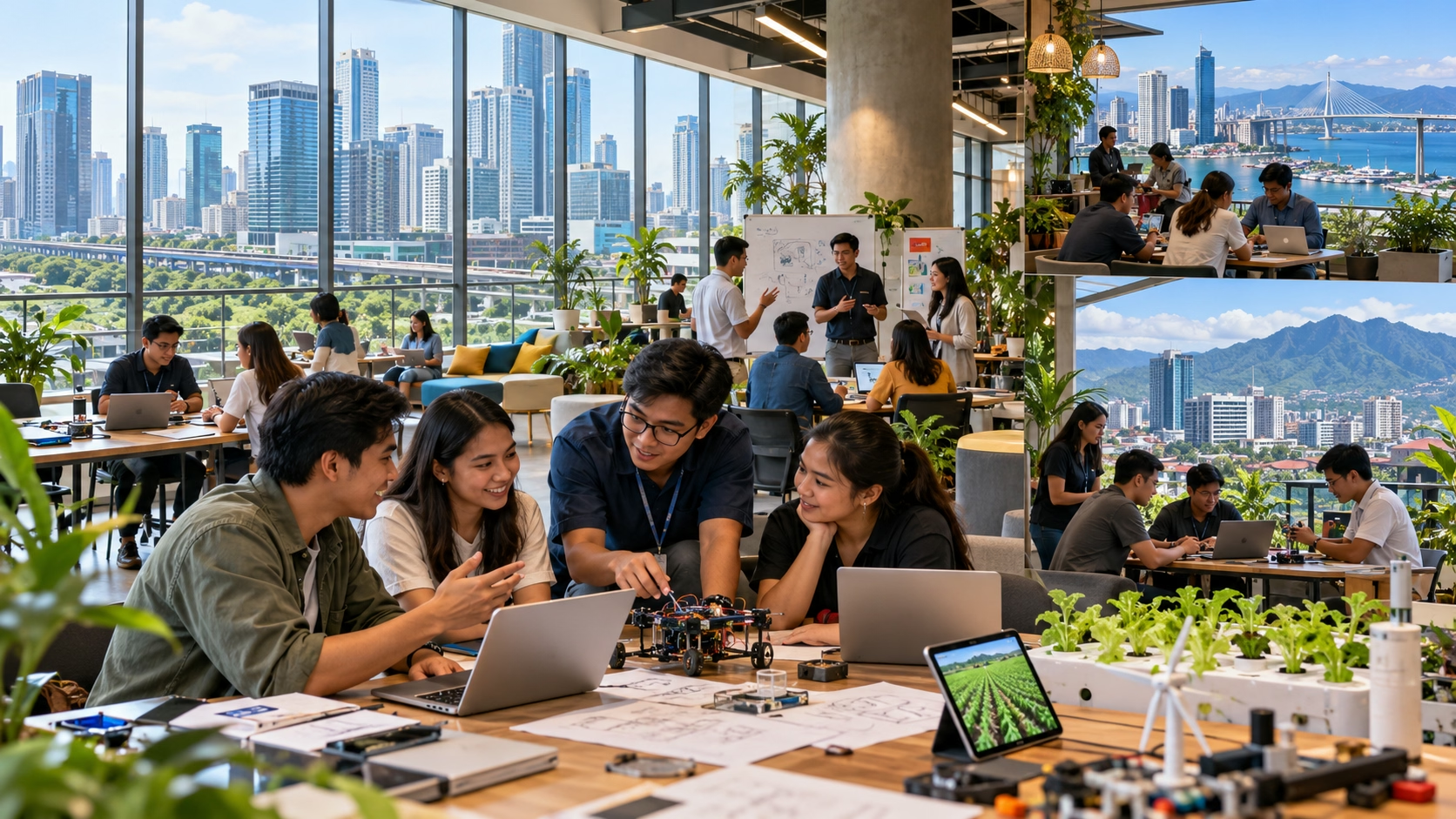
In April 2026, the Department of Science and Technology launched its first innovation hub in Metro Manila at the Colegio de Muntinlupa campus, an open-access pre-incubation platform designed to turn research ideas into practical, science-based solutions. The facility serves the MUNTAPARLAS area — Muntinlupa, Taguig, Pateros, Parañaque, and Las Piñas — offering programs in idea development, validation, capacity building, and networking for students, researchers, and MSMEs.
The iHub model addresses a specific failure mode in Philippine innovation: ideas that stall not because they are weak, but because they lack support or a clearly defined market. As DOST-NCR Regional Director Engr. Romelen T. Tresvalles put it, “There is no bad idea among our students, researchers, and innovators. Sometimes, ideas get stuck not because they are not good — sometimes it is due to limited support or because the market has not been clearly defined”.
The Muntinlupa hub also houses a unit of Project SARAi CeNTRO, which supports data-driven agricultural planning — a reminder that even in a highly urbanized region, nearby areas retain agricultural potential that can be unlocked through technology.
PEZA’s Ecozone Expansion and the Metro Manila Reopening
Parallel to the iHub rollout, the Philippine Economic Zone Authority has been aggressively expanding its physical footprint. In 2026, PEZA targeted the opening of approximately 30 economic zones, including information technology parks in Metro Manila. This followed President Marcos’s administrative order lifting a Duterte-era moratorium on new ecozones in the capital region, which had restricted PEZA’s ability to accredit new IT parks and centers.
The implications for startups are direct. PEZA-registered enterprises enjoy fiscal and non-fiscal incentives, and for technology companies seeking a formalized, incentivized operating environment, the reopening of Metro Manila ecozones removes a significant bottleneck. Five Metro Manila IT parks and centers — including Altaire, One Trium Tower, ARCA South 1, Parqal, and The Yuchengco Centre — were already seeking PEZA registration by mid-2026.
The Regional Dimension: Davao and Central Visayas
The geography of Philippine innovation is also shifting beyond Luzon. Davao City experienced a 97.7% ecosystem growth rate in 2025, following a 208-spot jump in global rankings in 2024. In September 2026, DOST Central Visayas participated in the StartupIsland.PH Venture Ready: Deal Readiness Track Program, presenting Innovation Hubs and Technology Business Incubation services to regional founders.
For a startup founder in Iloilo, Cebu, or Davao, the distance to institutional support has narrowed — not because of a single program, but because of a layered network of hubs, ecozones, and regional DOST offices that translate national policy into local infrastructure.