
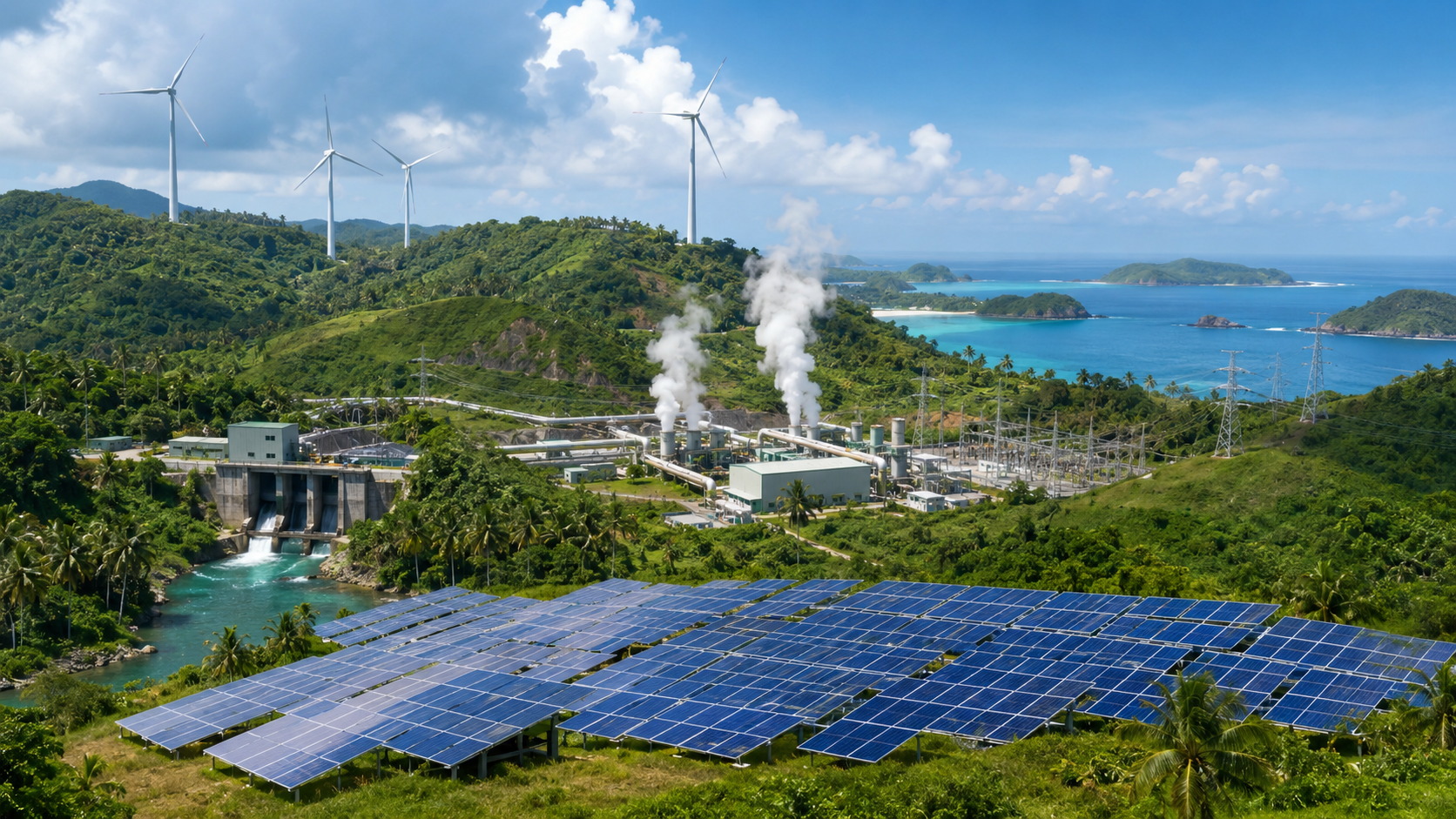
Clean Energy Is Now a Security Issue
The renewable energy story in the Philippines is often framed as an environmental issue, but the sharper angle is energy security. The country has long faced exposure to imported fuel prices, supply disruptions, and regional power constraints. As electricity demand rises, renewable energy has become a strategic tool for reducing vulnerability.
This is why companies such as ACEN, AboitizPower, Energy Development Corporation, Solar Philippines, Citicore Renewable Energy Corporation, and Alternergy are receiving greater attention. They are not only developing clean power projects. They are helping reshape how the Philippines thinks about resilience, affordability, and long-term competitiveness.
The Department of Energy’s renewable energy program supports this direction, with targets to raise renewable energy’s share in the power generation mix to 35% by 2030 and 50% by 2040. The official DOE reference is available here: https://www.doe.gov.ph/renewable-energy.
ACEN Turns Renewable Energy Into a Scalable Platform
ACEN is one of the clearest examples of a Philippine company treating renewable energy as a growth platform. Its portfolio includes solar and wind projects, and its regional expansion shows how local capital can participate in the broader Asia-Pacific energy transition.
In the Philippine context, ACEN’s role is significant because it supports the idea that clean energy can attract serious institutional investment. The company’s activities also highlight how renewable energy developers are moving beyond single-project operations and building diversified portfolios.
AboitizPower Faces the Transition Challenge Head-On
AboitizPower’s position is complex because it operates at the intersection of conventional power, renewable expansion, and customer demand. That makes it one of the companies most exposed to the real trade-offs of the energy transition.
Its renewable assets, including hydro and geothermal interests, help strengthen the country’s cleaner power base. At the same time, its broader operations show that the shift toward renewables must be managed carefully to avoid reliability problems. In the Philippines, where power interruptions can affect business confidence and household welfare, this balance is essential.
EDC’s Geothermal Assets Offer Stability
Energy Development Corporation stands out because geothermal energy gives the Philippines a form of renewable power that is available around the clock. While solar output drops at night and wind varies with weather patterns, geothermal plants can provide steady generation.
This makes EDC strategically important as the grid absorbs more variable renewable energy. The company’s geothermal experience also gives the Philippines a technical advantage in a sector where only a limited number of countries have strong natural resources and operating expertise.
Solar Developers Are Changing Provincial Energy Economics
Solar Philippines and Citicore are part of a wider shift toward large-scale solar development. Their projects matter because solar farms can be built relatively quickly compared with many conventional power plants, especially when land, permits, and grid access are secured.
For provinces with strong solar resources, this creates new economic possibilities. Renewable energy projects can generate construction activity, local tax revenue, and long-term power supply options. The real challenge is connecting these projects efficiently to the grid and ensuring that power can reach demand centers.
Alternergy Shows Why Diversification Matters
Alternergy’s work in wind, hydro, and other renewable technologies demonstrates the value of a diversified energy mix. The Philippines cannot rely on one renewable source alone. Solar may dominate new capacity additions, but wind, hydro, and geothermal remain important for balancing the system.
What This Means for the Philippine Economy
The companies innovating in renewable energy are helping the Philippines reduce fuel-price exposure, improve climate resilience, and attract green investment. Their success will depend on transmission development, storage deployment, regulatory stability, and project execution. Still, the direction is clear: renewable energy is becoming a practical response to some of the country’s most urgent economic and security challenges.