From the Laboratory to the Market: When Philippine Climate Innovators Get a Funding Pathway
The Philippines has many local climate solutions—from community wind energy to precision agriculture—but they often stumble at the gap between prototype and scale. On September 17, 2026, at Fairmont Makati, the Philippine government together with the Global Green Growth Institute (GGGI), NH Investment & Securities, and NH Absolute Return Partners launched the Collaborative Research, Development, and Business Programme for Promoting Innovation of Climate Technopreneurship.
Regional Scale, National Execution
The USD 221 million program covers the Philippines, Cambodia, Indonesia, Laos, and Vietnam. Funding comes from the Green Climate Fund (GCF) through the Korea Development Bank (KDB), combining country-level acceleration, technical assistance, and an investment fund from early stage to scale-up. For the Philippines, implementation is led by GGGI with national stakeholders to strengthen the pipeline of investment-ready companies.
What Makes It Different from Conventional Incubators
The program does not stop at training. The launch discussions covered research and development support from the Department of Science and Technology (DOST), the role of intellectual property in commercialization with WIPO GREEN and IPOPHL, and dedicated sessions on co-financing with KDB, NH Investment, Asian Development Bank Ventures, and Gobi Partners. This means Philippine climate startups gain simultaneous access to technical resources, IP protection, and institutional investors—three things usually obtained separately and over years.
Real-World Context: Local Solutions for Local Problems
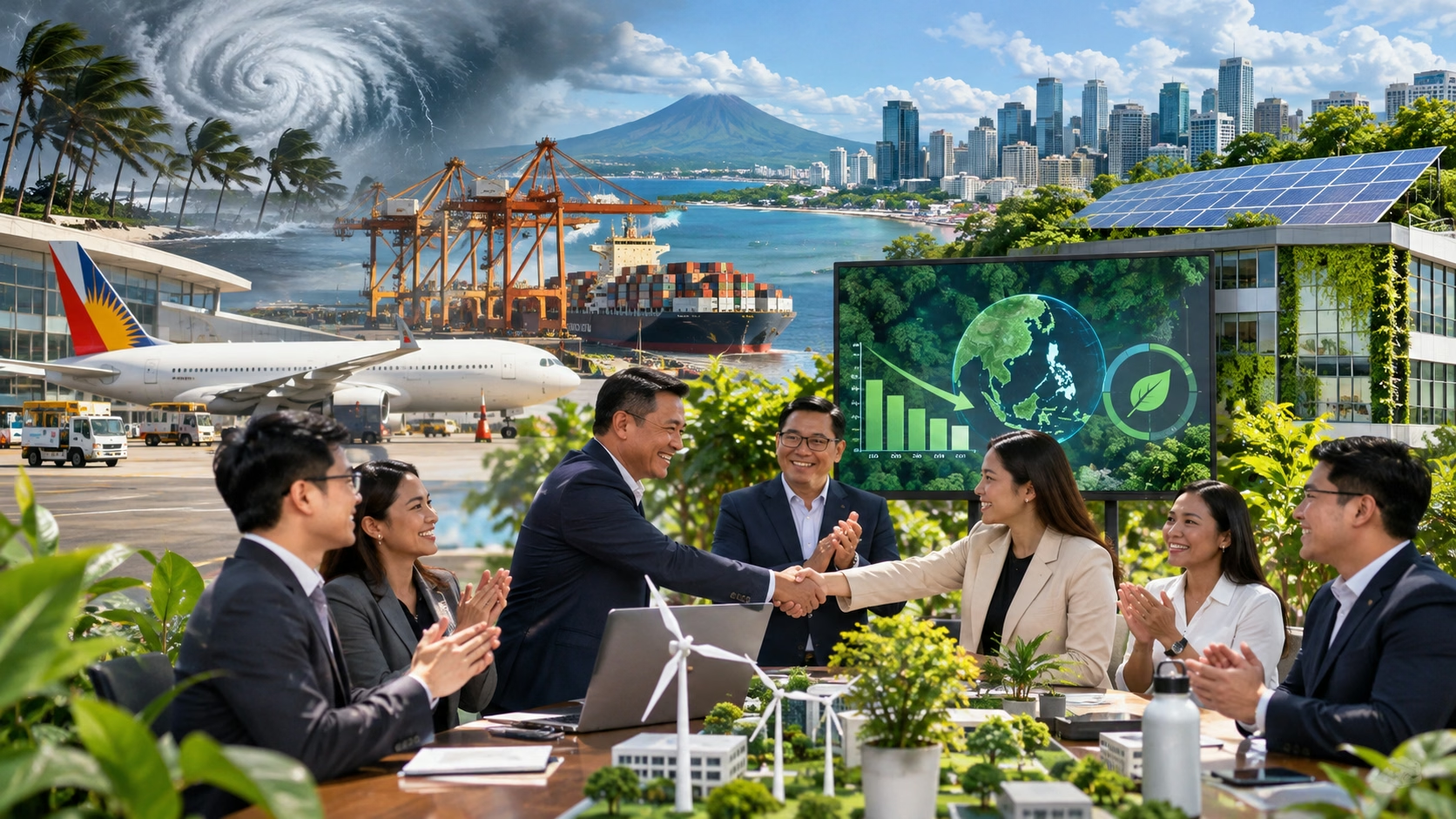
GGGI representatives emphasized that the value of climate technology lies not in sophistication but in its impact on communities. The program explicitly targets solutions in manufacturing, agriculture, digital technology, and renewable energy. In a country that experiences an average of 20 typhoons per year, innovation that fails to reach the market means continued vulnerability. By connecting technopreneurs to corporate buyers and development finance institutions, the program seeks to move climate solutions from the periphery of the economy to the core of the value chain.