
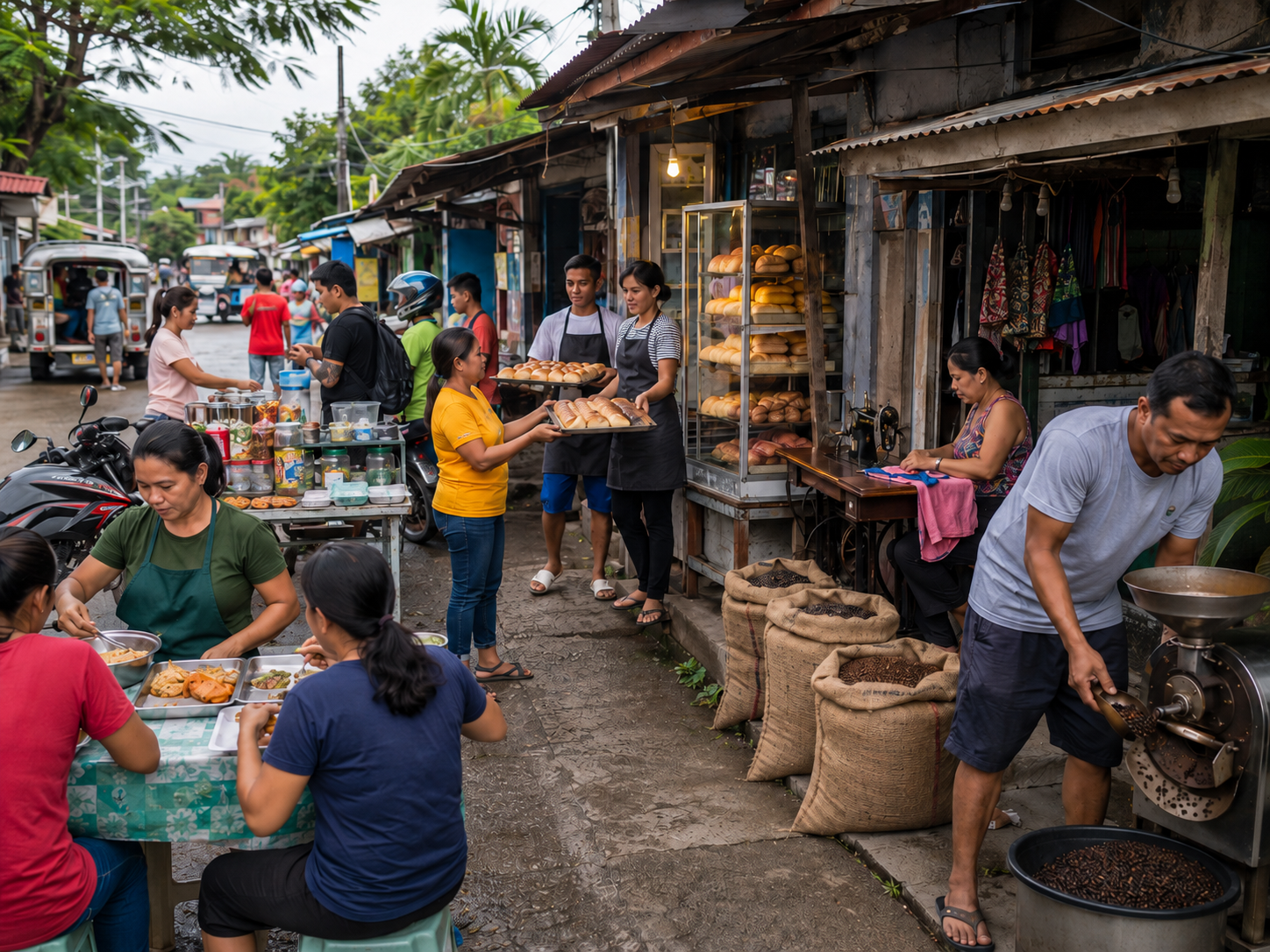
The Digital Storefront Revolution
The rapid spread of affordable smartphones and mobile data has transformed how Philippine micro enterprises operate. In 2026, a fish vendor in General Santos City can sell dried sardines to buyers in Luzon through Facebook Live, while a weaver in Baguio uses Instagram Reels and Shopee to reach urban customers. According to the e-Conomy SEA 2024 report by Google, Temasek, and Bain & Company, the Philippines is among the fastest-growing digital economies in Southeast Asia, with e-commerce adoption by small sellers accelerating faster than in any other segment. Read the e-Conomy SEA report.
Platform Ecosystems and Local Government Support
E-commerce platforms have developed seller-friendly tools tailored for micro businesses, including no-code storefronts, integrated logistics, and digital payment options. Local governments have also stepped in by offering free Wi-Fi in public markets, digital literacy training in barangay halls, and product photography support for local delicacies. The Department of Trade and Industry’s e-commerce campaigns encourage MSMEs to register on multiple platforms, ensuring that sellers are not dependent on a single marketplace. These public-private efforts reduce the digital divide that once kept rural producers out of national markets.
Rural Youth Employment and New Service Jobs
Digital commerce creates more than direct sales income. It generates demand for local delivery riders, packaging designers, social media managers, and inventory assistants in small towns. In Laguna and Cebu, young workers who previously migrated to Manila for call center jobs now stay in their home provinces to manage online stores for family businesses. This reverse migration strengthens community bonds and spreads digital skills through peer networks.
Challenges in Logistics, Trust, and Digital Skills
Despite the promise, rural MSMEs still face unreliable shipping, high courier fees, and limited awareness of online fraud. Products such as frozen food and handicrafts require special packaging and cold chains that remain underdeveloped in remote islands. To address these gaps, cooperatives are investing in shared fulfillment hubs and barcode labeling systems. Financial platforms are also offering seller protection programs that build trust between micro sellers and first-time online buyers.
The digital transformation of Philippine MSMEs is not a niche trend—it is a structural shift that can equalize opportunity between urban and rural communities. By continuing to invest in digital infrastructure, logistics, and seller education, the country can turn thousands of informal micro businesses into active participants in the national digital economy.