
The Paycheck Is No Longer Just a Paycheck
For nearly 1.9 million Filipino BPO workers, payday has historically meant a deposit into a bank account — and little else. Financial services remained separate, fragmented, and often inaccessible. But a new embedded finance initiative from Maya and the IT and Business Process Association of the Philippines (IBPAP) is transforming payroll from a simple disbursement mechanism into a gateway to financial health.
Under the program launched in March 2026, Maya and IBPAP are making formal financial tools — including savings products and responsibly underwritten credit cards — accessible to qualified digital workers across the BPO sector. The initiative reflects a broader insight: if you control the payroll rail, you control the entry point to a worker’s entire financial life.
Payroll as the First Step Toward Financial Inclusion
Kristoffer Rada, Head of Corporate Affairs at Maya, articulated the vision at the European Chamber of Commerce of the Philippines (ECCP) 2026 Future of Work Forum: “The future of work should also mean better financial tools for workers. Reliable digital salary disbursement is the starting point. When payroll connects people to saving, payments and responsible credit, it can support financial health well beyond payday”.
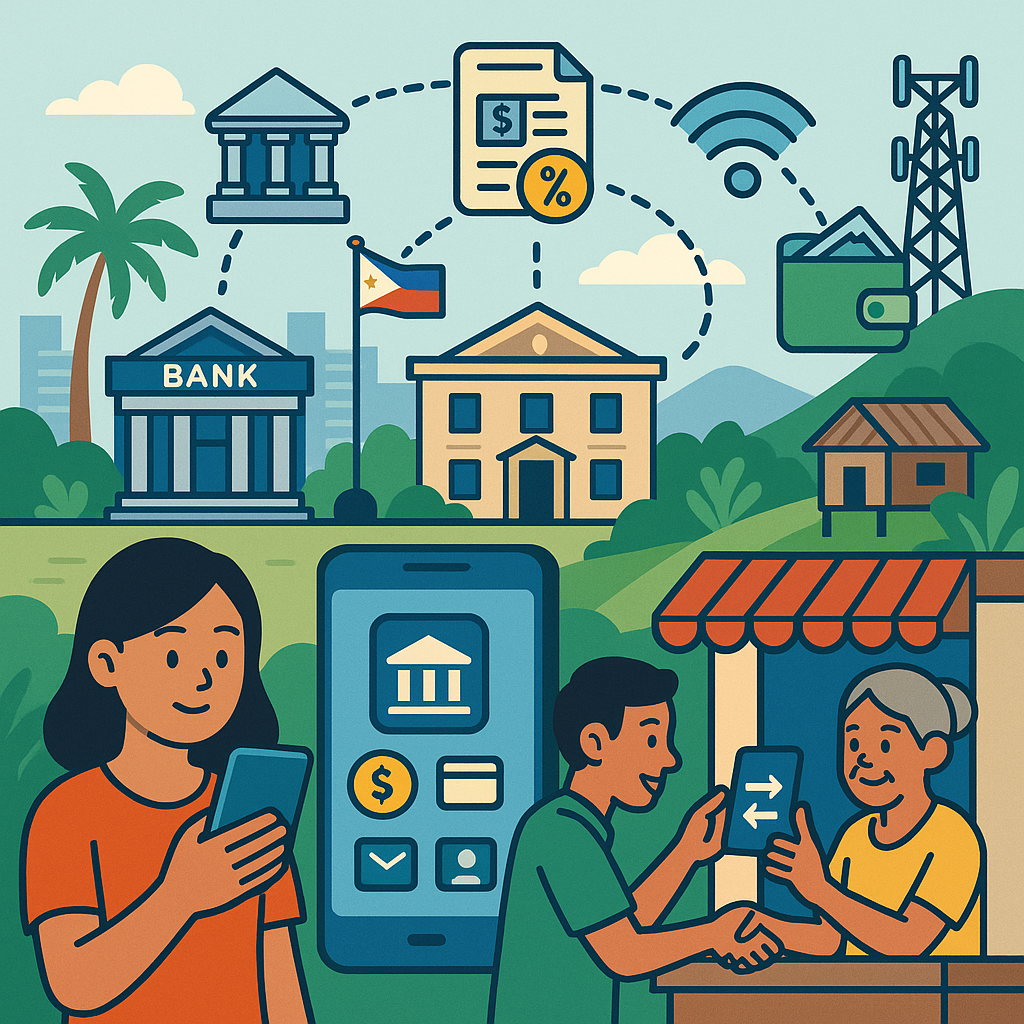
The mechanics are integrated into Maya Business, which employers use to send salaries and employee payouts at scale. Workers receive funds within the Maya ecosystem, where they can immediately transact, set funds aside in savings, and begin building a financial footprint. As that footprint develops, Maya’s AI-driven systems can use consented data to make more informed credit decisions — including for customers with limited traditional credit histories.
This is embedded finance in its most sophisticated form: not a standalone product, but a connected financial journey that begins with a salary deposit and extends into savings, credit, and wealth-building.
Open Finance and Payroll Portability: The Next Frontier
Maya is not stopping at payroll disbursement. The company is actively advocating for payroll portability, which would allow employees to choose where their salaries are deposited — a shift that would require bank-agnostic disbursement through interoperable payment infrastructure.
Open Finance could complement this by allowing workers, with their consent, to securely share financial information and access services better suited to their needs. “Digital payroll is the starting point,” Rada explained. “Payroll portability can eventually give workers more choice over where their salaries go, while Open Finance can help them use their own data to access more relevant services”.
For the Philippines, where 50.2% of approximately 82 million adults remain unbanked, embedding financial services into payroll represents a scalable pathway to inclusion. Workers who receive salaries digitally and immediately gain access to savings and credit tools are effectively being onboarded into the formal financial system — without ever visiting a bank branch.
AI Governance and Responsible Embedded Finance
As embedded finance scales, so do concerns about data privacy, algorithmic bias, and consumer protection. Maya has responded by building a formal AI governance framework, beginning in 2024 with a Board-approved policy covering risk classification, testing, monitoring, security, and human accountability.
Rada emphasized that responsible adoption requires more than technology: “Businesses need people across functions who understand how AI can be applied responsibly, while government and industry need to continue investing” in oversight and education. This balanced approach — innovation paired with governance — is becoming a template for how embedded finance can scale without eroding trust.
Beyond BPO: A Blueprint for the Broader Workforce
While the Maya–IBPAP initiative targets BPO workers, its implications extend far beyond a single sector. The gig economy, freelance workforce, and remote-first employers are all candidates for embedded payroll-based financial services. As digital payroll infrastructure matures, the distinction between “getting paid” and “being banked” may eventually disappear.