
The Philippines has become an important space for startups that focus on environmental solutions. The country’s geography makes sustainability especially urgent. With more than 7,000 islands, long coastlines, dense cities, and disaster-prone communities, environmental problems can quickly affect public health, food security, housing, and economic stability. Because of this, technology startups are beginning to play a larger role in helping the country manage waste, reduce pollution, support farmers, and shift toward cleaner systems.
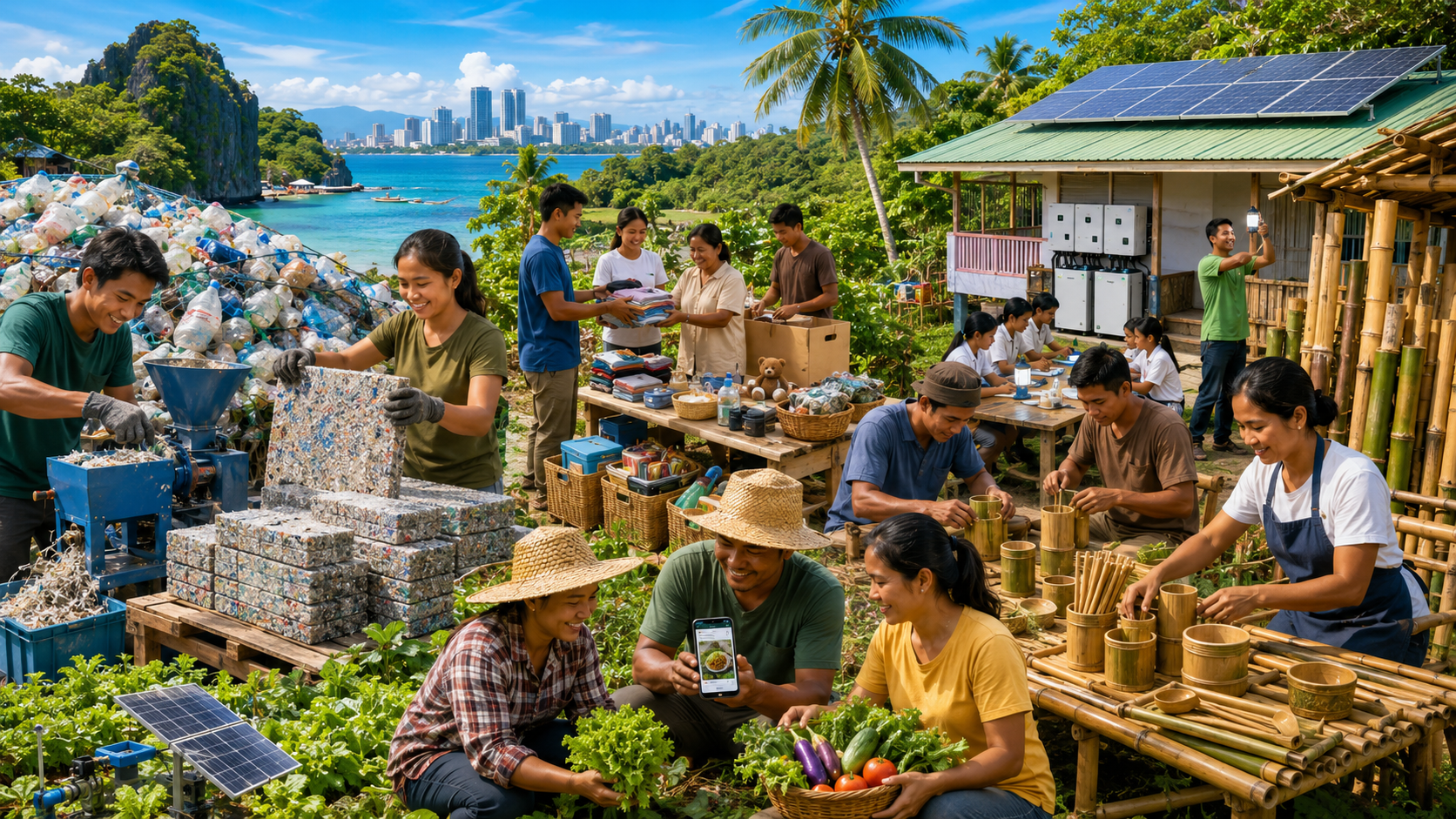
One of the strongest areas of innovation is waste reduction. Many environmental businesses in the Philippines focus on giving waste a second life. Green Antz Builders, for instance, works with plastic waste and transforms it into materials that can be used in construction. By turning discarded plastic into eco-bricks and pavers, the company helps reduce pollution while producing useful building materials. This approach is especially relevant in cities where waste collection and landfill capacity remain major concerns.
Another example is Humble Sustainability, which operates in the circular economy space. Many companies generate waste not because their products are useless, but because items are overstocked, returned, slightly damaged, or no longer part of regular inventory. A technology platform can help organize, track, resell, or donate these products. This kind of solution reduces waste at the business level and encourages companies to think differently about surplus goods.
Sustainable materials are also part of the startup movement. Bambuhay and similar enterprises use bamboo as an alternative to plastic and other less sustainable materials. Bamboo is valuable because it grows quickly and can be shaped into everyday products such as toothbrushes, utensils, straws, and packaging. In the Philippine setting, bamboo businesses can also create livelihood opportunities for rural communities while promoting environmentally friendly consumption.
Agriculture is another field where environmental startups can make a significant difference. Food waste often happens because of weak market connections, poor logistics, and unpredictable demand. Agritech platforms can help farmers sell directly to restaurants, households, and institutional buyers. By using digital tools to organize orders, deliveries, and pricing, these startups can reduce spoilage and make the food system more efficient. A better food system also reduces wasted water, land, fuel, and labor.
Energy technology is equally important. Many Philippine communities still face high energy costs or unstable electricity access. Solar-powered systems, clean lighting solutions, and energy-monitoring technologies offer alternatives that are more sustainable than fossil-fuel-based power. For island and rural communities, small-scale renewable systems can be more practical than waiting for large infrastructure projects.
What makes these startups meaningful is that they do not treat environmental protection as a separate issue. Instead, they connect it to business, employment, housing, agriculture, and community development. A plastic recycling startup can support construction. A bamboo company can support farmers and artisans. An agritech platform can reduce waste while improving farmer income. A clean energy provider can reduce emissions while helping students study at night or businesses stay open.
The Philippine environmental startup ecosystem still faces challenges, including funding gaps, regulatory complexity, infrastructure limitations, and consumer price sensitivity. However, its direction is promising. These startups demonstrate that environmental action can be practical, local, and economically useful. With stronger support from investors, corporations, schools, and local governments, green technology in the Philippines can become a key driver of sustainable development.