
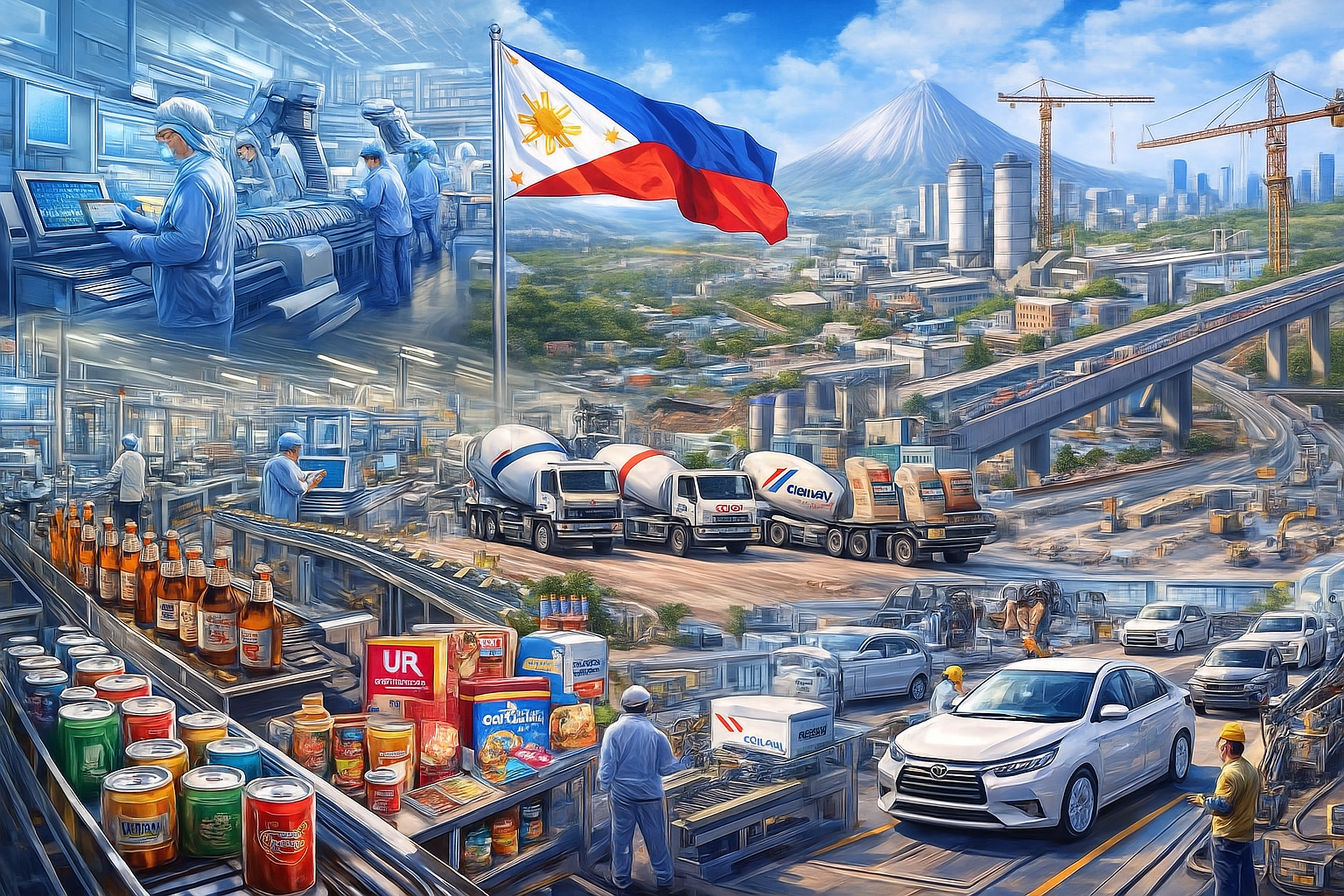
The manufacturing sector in the Philippines functions as a key anchor for economic development, balancing export-oriented production with the needs of a growing domestic market. A cluster of influential companies, both local and multinational, shapes this landscape by specializing in electronics, consumer goods, automotive products, and construction materials. Understanding who these players are and what they produce helps clarify how the sector operates in practice.
One of the most export-intensive branches of Philippine manufacturing is electronics and semiconductors. Major firms such as Texas Instruments Philippines, Analog Devices, and ON Semiconductor have turned the country into a major center for assembly and testing. Their plants produce integrated circuits, sensors, and power devices that are shipped around the world and incorporated into smartphones, computers, vehicles, and industrial machinery. These operations depend on a combination of skilled labor, cost efficiency, and supportive government policies, including the incentives offered by PEZA zones.
The consumer food and beverage segment is dominated by companies that have become household names. San Miguel Corporation continues to be a dominant force, with breweries, food processing plants, and packaging facilities scattered across the archipelago. It supplies beer, soft drinks, processed meats, and dairy products to millions of consumers. Universal Robina Corporation strengthens this ecosystem with its extensive range of snacks, candies, beverages, and convenience foods that have also found markets abroad. Monde Nissin further diversifies the product landscape through instant noodles, biscuits, and emerging categories such as plant-based meat alternatives.
Multinational corporations add a global perspective to local manufacturing. Nestlé Philippines runs sophisticated plants that produce coffee mixes, powdered milk, and baby food. The company has invested in capacity expansions, quality assurance systems, and sustainability initiatives such as waste reduction and energy efficiency. It also works directly with farmers and cooperatives to ensure reliable and high-quality supplies of raw materials, thereby connecting small-scale agriculture with large-scale processing.
The building materials industry plays a crucial role in supporting urbanization and infrastructure programs. Firms like Holcim Philippines, CEMEX Holdings Philippines, and Republic Cement manufacture cement and related products used in roads, bridges, high-rise buildings, and industrial estates. As the government and private sector scale up construction projects, these companies respond by expanding production lines, modernizing plants, and optimizing logistics networks to reach construction sites across the country’s many islands.
Meanwhile, the automotive and auto parts manufacturing segment contributes to industrial diversification. Toyota Motor Philippines and Mitsubishi Motors Philippines assemble vehicles at local plants, supporting a supplier network that produces parts ranging from metal components to electrical systems. Wire harness manufacturers affiliated with global groups such as Yazaki and other Japanese companies operate in export-oriented zones, shipping their products to automotive assembly plants worldwide. These firms showcase how Philippine manufacturing can plug into global supply chains beyond simple final assembly.
Together, these leading companies illustrate the breadth of Philippine manufacturing. They generate employment for hundreds of thousands of workers, stimulate demand for raw materials and services, and help transfer technology and management practices. Their performance has a direct impact on the country’s balance of trade, regional competitiveness, and ability to adapt to trends such as automation, digitalization, and sustainability in global industry.